Guide
What is chai?
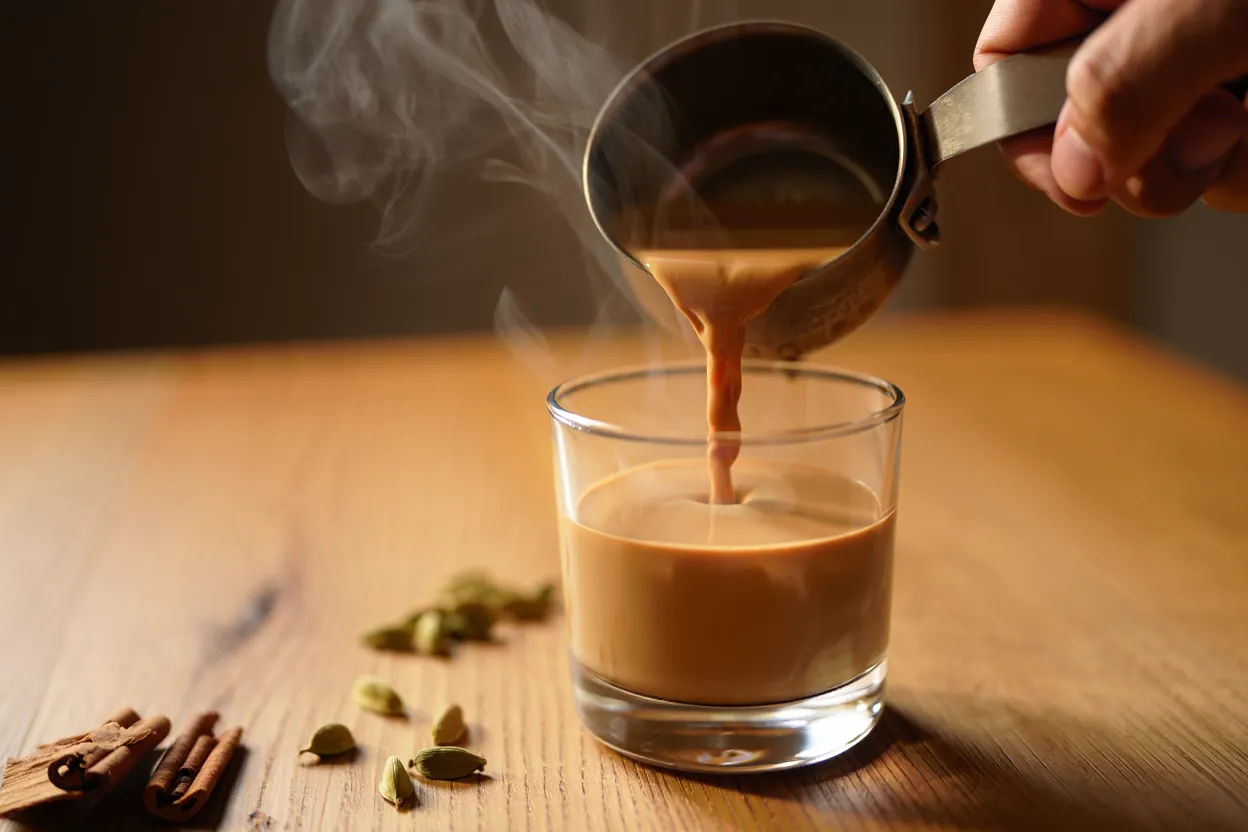
Chai means tea. That is the whole translation — so “chai tea” literally says “tea tea”. What English speakers usually mean by chai is masala chai: tea with spices.
The word travelled a long way to get here. It descends from the Chinese chá, moved west along the overland trade routes, and turns up as chay, shai and chai across Central Asia, Russia, Turkey and the Middle East before settling into Hindi and Urdu. Tea that travelled by sea instead — via the Min Nan te — became “tea”, “thé” and “Tee”. Same leaf, two routes, two words.
What makes it masala chai
Four things, simmered together rather than steeped:
- Strong black tea, almost always Assam
- Milk, cooked with the tea rather than poured in after
- Whole spices — cardamom, ginger, pepper, cinnamon, clove in varying combinations
- Sugar, usually more than a Western palate expects
That simmering is the real difference. Western tea-making steeps leaf in hot water and adds milk at the end. Chai boils everything together, which extracts far more from both the leaf and the spices, and produces a thicker, sweeter, more concentrated drink.
Chai vs chai latte
A café chai latte is usually steamed milk mixed with a sweetened concentrate or syrup. It is a different drink — milkier, sweeter, and often carrying no simmered spice at all. Nothing wrong with it, but it is not what is being poured on an Indian street.
Not a fixed recipe
There is no authoritative masala chai. The proportions change by household, and the leading spice changes by region — lemongrass in Maharashtra, cardamom in the north, ginger through the centre, and the full spice box in Gujarat. Anyone claiming a single correct recipe is selling something.
What does stay constant is the role it plays: chai is not a ceremony or a connoisseur's drink. It is what gets poured a dozen times a day, at home, at work, at the roadside, for whoever happens to be standing there.
Shop chai & tea
85 chai blends in stock across 20 brands. Sold and shipped by Taste of Tea.
Browse the shopReady to make it? The brewing guide covers ratios and method.