Single Origin
Upper Assam Tea
Brisk, malty and full-bodied, from the Assam valley in north-east India. The tea that carries milk better than any other — and the reason chai tastes the way it does.
The Assam valley sits on rich alluvial soil at low altitude, in real heat and heavy monsoon rain. Those conditions push the plant hard, and the resulting leaf is strong, dark and high in the compounds that give a cup its briskness. Upper Assam — the eastern end of the valley — is the most concentrated expression of it.
Tasting notes
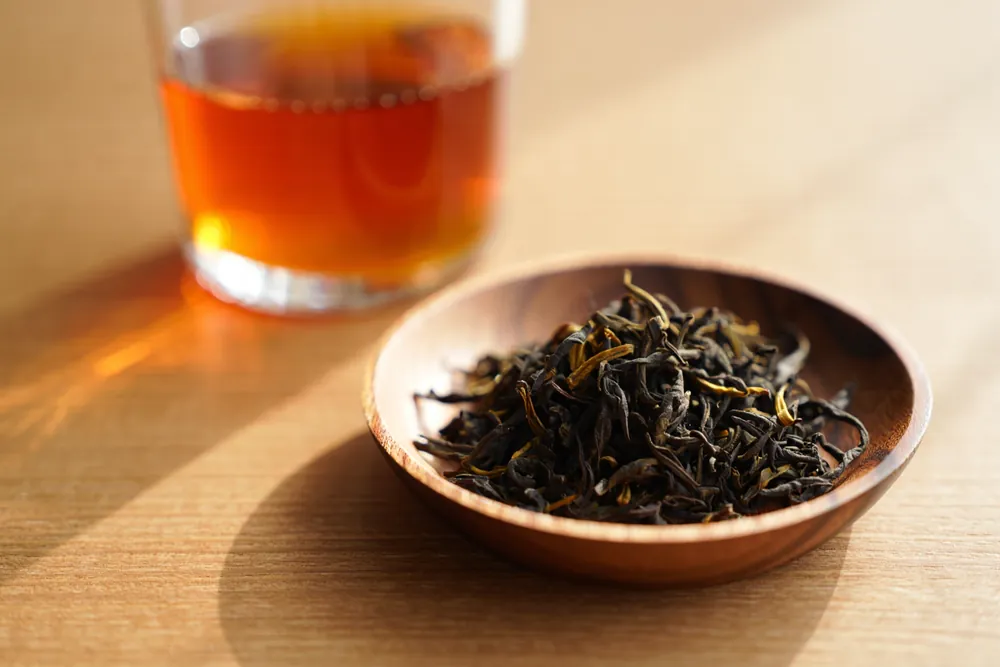
Rich brown leaf with golden tips. The liquor is deep amber to red, thick in the mouth, with a layered malty character — the word most people land on is “biscuity”. There is a brisk edge to it that stops the maltiness from turning heavy.
Crucially, that flavour is not overpowered by milk. Most teas collapse into blandness when dairy goes in; Assam pushes back. That is exactly why it became the base for masala chai, where it has to survive milk, sugar and five spices and still be recognisable.
Brewing it plain
Measure 1 teaspoon of leaf per cup. Pour freshly boiled water over it and cover.
Steep 3–5 minutes depending on the strength you want, then strain. Assam takes milk very well; at 5 minutes it will be strong enough to need it.
Over-steeping is the common error — past about five minutes the briskness turns to astringency and the malt disappears behind it.
When to drink it
Assam is a morning tea. The strength that makes it good with milk also makes it a poor choice late in the day, and it is the traditional backbone of English breakfast blends for exactly that reason.
Assam tea in stock


Shop chai & tea
85 chai blends in stock across 20 brands. Sold and shipped by Taste of Tea.
Browse the shop