Chai Culture
Dhaba chai
A dhaba is a roadside eating house on an Indian highway, built for truck drivers and anyone else travelling long distances. The chai served there is its own style — stronger, sweeter and cooked harder than anything made at home.
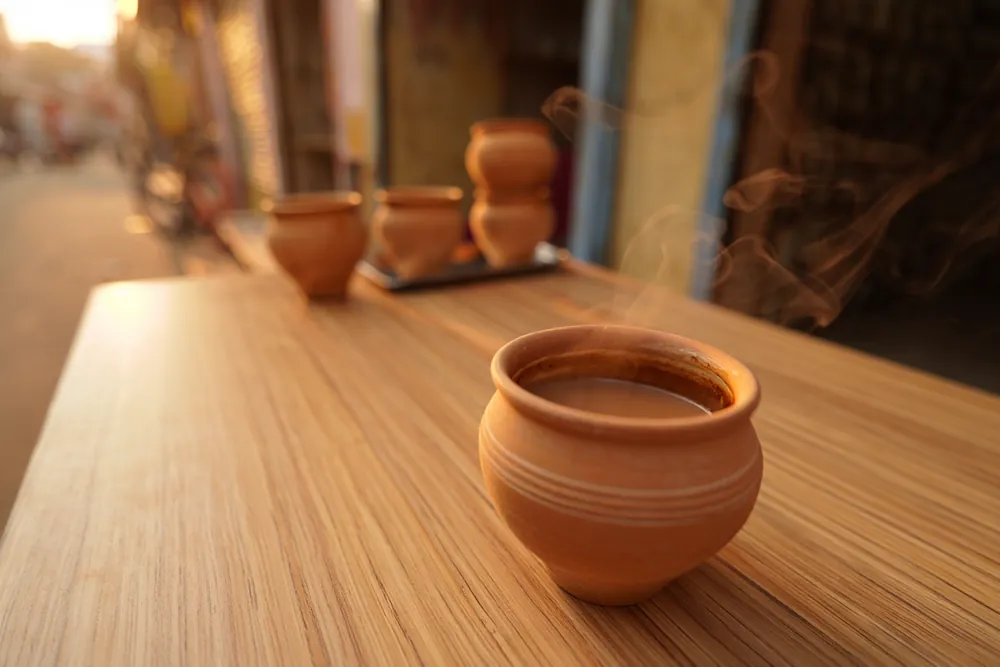
The economics explain the taste. A dhaba pan is never empty and rarely comes off the heat. Tea, milk, sugar and spice go in through the day and the mixture is kept moving, which means the leaf gets far more contact time than a home brew and the milk takes on a faintly cooked, caramelised character. The result is thick, dark and intensely sweet — a drink built to keep a driver awake for another two hundred kilometres.
What makes it taste that way
- Long extraction — the tea is not simmered for three minutes, it is simmered more or less continuously
- Full-fat buffalo milk, which is richer than cow's milk and stands up to the heat
- Heavy sugar — enough to balance the tannin of a very long brew
- Ginger, mostly — dhaba chai leans toward adrak rather than a full spice box
Making something like it at home
You cannot really reproduce a pan that has been going since morning, but you can move in that direction: use more tea than usual, cut the water and increase the milk, add ginger generously, and let it simmer five minutes rather than three. Expect it to be strong enough that sugar stops being optional.
The related street style is platform chai — same strength, but served fast and in tiny cups, built around the length of a train stop rather than a truck journey.
Shop chai & tea
85 chai blends in stock across 20 brands. Sold and shipped by Taste of Tea.
Browse the shop